Whole-Home Mold Remediation in Plano, TX
The plumber found the slab leak under the kitchen, but by then the hallway carpet, the pantry wall, the dining room baseboard, and the back of the master closet all read wet. Or the attic line split during the freeze, the power was out, and water came through three ceilings before anyone could reach the shutoff. Either way, the growth is in more rooms than you can count on one hand. This site connects you by phone with an independent local provider who does whole-home mold remediation in Plano and across Collin County.
Mapping the wet before anyone decides what comes out
A multi-room job starts with a map. The crew meters every wall and every floor in the house, including the rooms that look fine, and draws the wet footprint on a sketch of the floor plan. Thermal imaging speeds that up in a slab house, because water under a floating floor or inside a wall shows cold long before it stains. Only then do they decide the zones and the order.
The scope is written down before any demolition: which walls open, to what height, which floors come up, which cabinets come off, and where the removal stops and the rebuild begins. You see that list before the plastic goes up. Changes mid-job, when the wall is open and the wet goes farther than the meter promised, are explained before they happen.
Shut the water, document everything, decide where you will sleep
Turn the water off at the meter box and leave it off until a plumber has found and fixed the break. Photograph every room, every stain, and every soft floor before anyone moves furniture. Pull valuables and clothes out of closets that are going to be opened.
Keep the air conditioning on. Then talk through where the household will live during the work. Many families stay through a two-zone job; a job that opens the kitchen, the hall, and two bedrooms at once, or a house with someone whose asthma flares around mold, often plans a week elsewhere.
Zone by zone: contain, remove, clean, dry, release
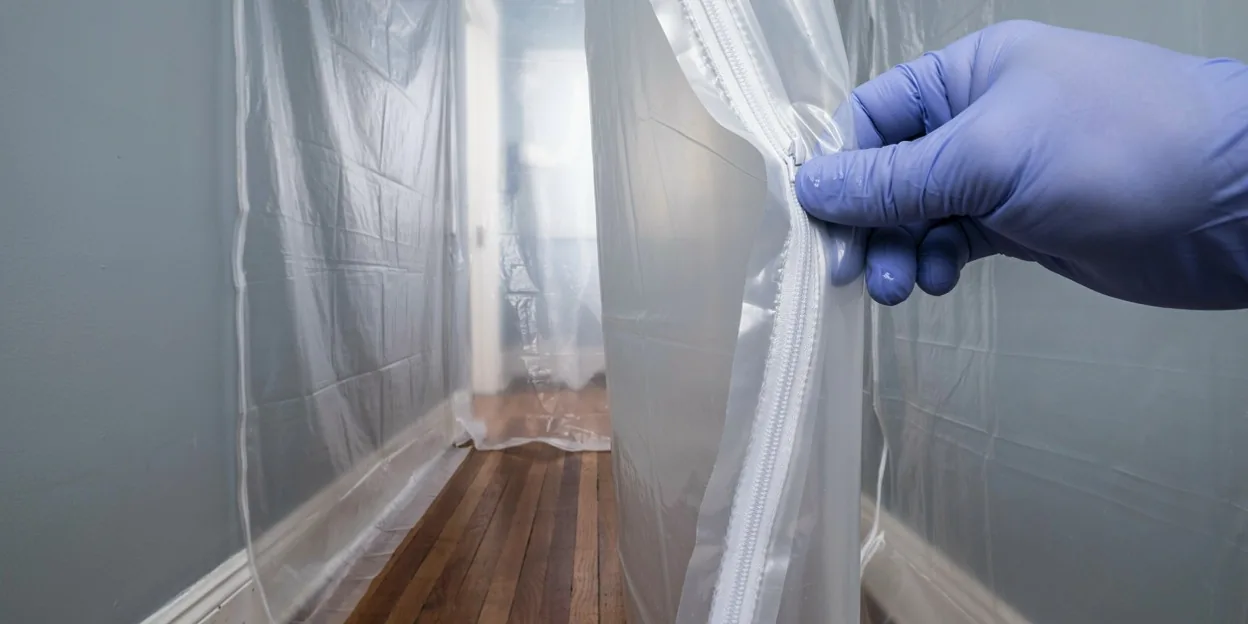
Each zone gets its own containment, its own negative-air machine, and its own sequence. Wet drywall, baseboard, pad, and insulation come out to the marked line. Cabinets that sat in water are pulled so the wall and floor behind them can be reached. Framing and slab are HEPA vacuumed and wiped, then dried with air movers and dehumidifiers until the readings normalize, and only then does that zone release for rebuild.
The HVAC system is part of the map. If the air handler ran while the house was wet, the ducts and coil are checked, which is HVAC mold cleaning. A freeze leak that came from the attic also means attic mold remediation on the decking and joists around the split. The rebuild across every zone is mold damage repair.
The slab leak nobody saw and the freeze everybody remembers
Two Plano stories account for most whole-house calls. The first is a slab leak in a 1970s or 1980s house east of Central Expressway, where the Blackland clay moved and a copper line or a cast iron drain under the concrete cracked and ran for a season before the floor felt damp. By then the water had spread sideways under several rooms. The second is February 2021, when Dallas hit minus 2 degrees on the 16th, power failed across North Texas, and attic supply lines split in houses from Downtown Plano to Frisco. Many ran for hours before anyone could find the shutoff.
Water that comes through a ceiling or up through a slab in a closed, air-conditioned house does not dry on its own. A whole-house job over 25 contiguous square feet of growth needs a TDLR mold remediation contractor license, the remediator cannot also be the assessor on the same project, and you should receive a Certificate of Mold Damage Remediation within ten days of completion. Rebuilding that touches plumbing or electrical runs through Plano's Building Inspections office or your own city's permit desk.
Calling about a house with several wet rooms in Plano
Have the address, how many rooms are affected, and what let the water in: a slab leak, a freeze break, a failed water heater, or a roof. Say whether the water is off, whether a plumber has been out, and whether anyone in the house has breathing trouble. Call (972) 787-0657.