Mold Removal in Lucas, TX
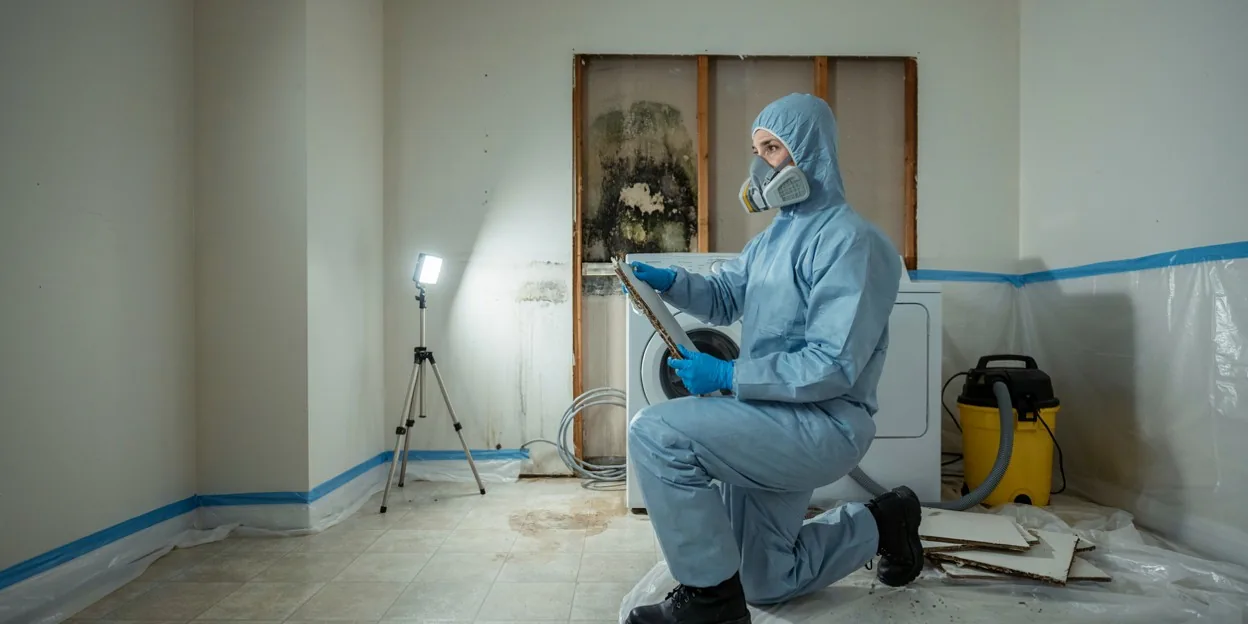
Lucas lies northeast of Plano between Allen and Lavon Lake, a Collin County town that has kept one-acre minimum lots and a country feel while the cities around it filled in. The houses are mostly 1980s through 2010s custom builds on slabs, many with aerobic septic systems and sprinkler heads scattered across an acre of Blackland clay, and the newer ones carry the standard attic air handler and a second-floor laundry.
With no city sewer under most lots, the water problems in Lucas are slab lines, yard lines, and septic. A long supply line from the meter to the house can break at the foundation and keep the slab edge wet for a season. An aerobic system's spray field sitting too close to the house keeps one side of the foundation damp through a wet spring. The town also sat under the April 11, 2016 hail core, with 1.75-inch stones reported, and roofs patched late that year fed attic stains through the summer.
A Lucas homeowner who calls is connected to an independent local mold provider who meters the house and sets the scope. Our role is the phone call; the inspection of the house, the work, and the contract are theirs.
Lucas mold removal where the sewer line is a septic tank
A wet garage wall or utility room where the yard line enters is mold removal, traced to the line first. A ceiling stain under a second-floor laundry or an attic unit is HVAC mold cleaning if the pan overflowed, or mold removal on the ceiling if it was the washer. Insulation and decking under a hail-damaged roof are attic mold remediation.
A small town with its own permit desk
Rebuilds that touch plumbing or electrical in Lucas are permitted through the City of Lucas, a small office worth calling ahead of the crew. The city is also a member of the North Texas Municipal Water District, so the water in the pipes under a Lucas slab comes from Lavon Lake like Plano's.
Call (972) 787-0657 and tell us what you see. We put you through to a local mold provider serving Lucas.
Services Available in Lucas
Mold Removal
Growth on drywall after a slab leak, a water heater, or a washer box let go: room sealed, wet board cut to the meter line, framing HEPA-cleaned and dried.
Black Mold Removal
A dark patch handled by how far the water traveled, not its color: containment up, porous material out, hard surfaces cleaned, the leak fixed before closing.
Whole-Home Mold Remediation
A slab leak that ran for months or a line that split in a freeze and soaked several rooms, mapped wall by wall and cleared in zones as one project.
HVAC Mold Cleaning
Coil, drain pan, and condensate line cleaned or replaced when the attic air handler sweats through a 100-degree Plano summer and drips into the ceiling below.
Bathroom Mold Removal
Growth behind a vanity, under a shower pan, or on a ceiling with a weak fan, removed after the supply line or the drain leak behind it is repaired.
Attic Mold Remediation
Growth on roof decking under hail-cracked shingles or around a sweating duct, cleaned and treated once the roof and the insulation are put right.
Mold Odor Removal
A musty smell in a house that looks fine, traced to the wet pad under the floor or the drywall behind a cabinet, then removed and treated.
Mold Damage Repair
Drywall, texture, baseboard, and cabinet bottoms put back after removal, once the slab reads dry and the plumber has fixed what started it.