Mold Removal in Addison, TX
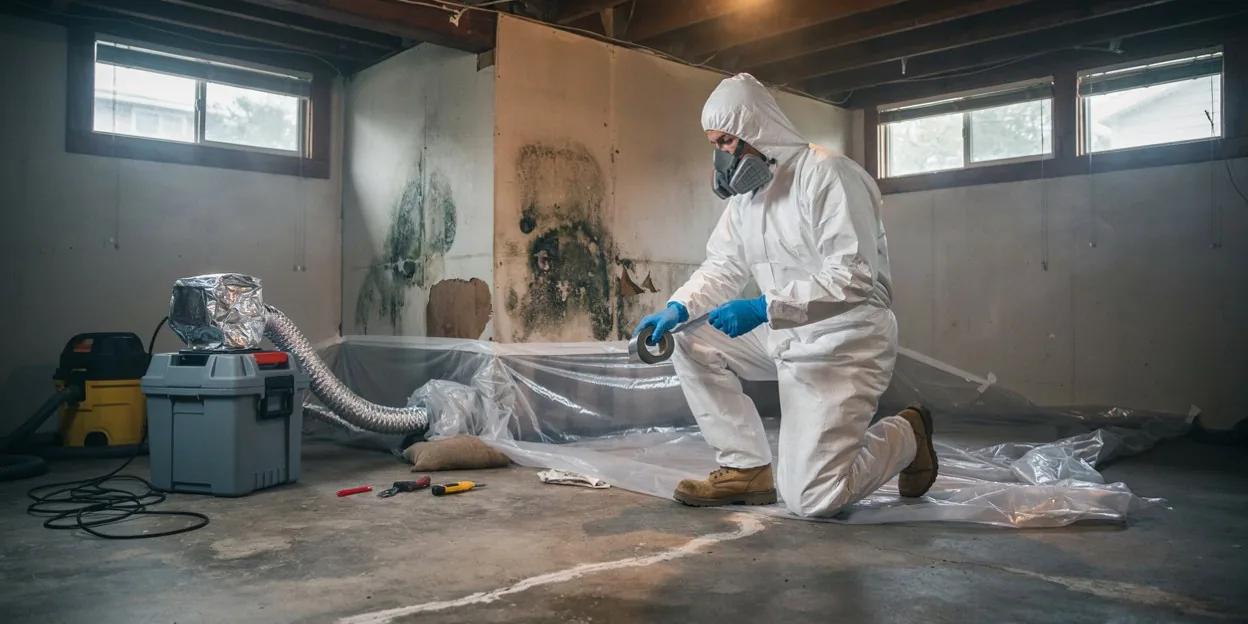
Addison is a small Dallas County town southwest of Plano, four and a half square miles of office towers, Belt Line Road restaurants, and an unusually dense housing stock: townhomes, condominiums, and garden apartments from the 1980s through the 2010s, with a few streets of 1960s and 1970s single-family houses in the original town. Shared walls and stacked units mean a leak rarely stays in the home where it started.
That is the Addison pattern. A water heater in an upstairs townhome closet fails and the unit below gets a wet ceiling. A condensate line from an attic unit in a three-story townhouse backs up and runs down a party wall. A slab leak under one end of a four-unit building keeps a neighbor's hall closet smelling like a creek bed. The question of whose insurance and whose association handles what comes up on nearly every call, and the provider documents each unit separately so that sorting is possible.
An Addison owner who calls this number is connected to an independent local mold provider who meters the unit and the ones it touches and writes a scope for each. We put the call through and leave the rest to that company.
Addison mold removal where the leak came from the unit next door
A wet ceiling under an upstairs neighbor's water heater or washer is mold removal, with the source documented for both owners. A party wall that reads wet along its length after a condensate backup is HVAC mold cleaning upstairs and mold removal on the wall. A musty townhome with nothing visible is mold odor removal, and the crew starts at the slab.
Town Hall and the airport that gives Addison its skyline
Rebuilds that move plumbing or electrical are permitted through the Town of Addison. The town grew up around Addison Airport, one of the busiest general aviation fields in the country, and much of the townhome stock sits within a mile of its runway.
Call (972) 787-0657 and tell us what you see. We put you through to a local mold provider serving Addison.
Services Available in Addison
Mold Removal
Growth on drywall after a slab leak, a water heater, or a washer box let go: room sealed, wet board cut to the meter line, framing HEPA-cleaned and dried.
Black Mold Removal
A dark patch handled by how far the water traveled, not its color: containment up, porous material out, hard surfaces cleaned, the leak fixed before closing.
Whole-Home Mold Remediation
A slab leak that ran for months or a line that split in a freeze and soaked several rooms, mapped wall by wall and cleared in zones as one project.
HVAC Mold Cleaning
Coil, drain pan, and condensate line cleaned or replaced when the attic air handler sweats through a 100-degree Plano summer and drips into the ceiling below.
Bathroom Mold Removal
Growth behind a vanity, under a shower pan, or on a ceiling with a weak fan, removed after the supply line or the drain leak behind it is repaired.
Attic Mold Remediation
Growth on roof decking under hail-cracked shingles or around a sweating duct, cleaned and treated once the roof and the insulation are put right.
Mold Odor Removal
A musty smell in a house that looks fine, traced to the wet pad under the floor or the drywall behind a cabinet, then removed and treated.
Mold Damage Repair
Drywall, texture, baseboard, and cabinet bottoms put back after removal, once the slab reads dry and the plumber has fixed what started it.